Risk warning:CFDs carry a high risk of rapid losses due to leverage. Only trade what you can afford to lose. Grades and scores are indicative, not a guarantee or financial or legal advice. Read moreCFDs carry a high risk of rapid losses. Grades and scores are indicative, not a guarantee or financial or legal advice. Read more
Six cases in ten months: Brazil's crackdown on offshore brokers, and what it means for traders
Brazil's securities regulator has opened sanctions cases against nine foreign trading platforms since 2021, six of them between April 2025 and February 2026, and in August fined Pocket Option's operator R$3.9 million. We read the CVM's own records: who is named, what the penalties have been, how the CVM decides a platform is targeting Brazil, and what it means for traders and for the firms that court them.
Foreign trading platforms in CVM sanctions cases since December 2021
9
Of those cases opened between April 2025 and February 2026
6
The largest penalty so far, against Pocket Option's operator, August 2026
R$3.9m
On 25 August 2026, the board of Brazil’s Comissão de Valores Mobiliários (CVM) unanimously fined Infinite Trade LLC, the company behind the Pocket Option platform, R$3.9 million for publicly offering securities in Brazil without registration. The ruling noted that Pocket Option’s Portuguese website, its social media profiles and a YouTube channel called “Pocket Option Brasil” were still live after two CVM stop orders, in 2021 and 2025.
It is the largest penalty so far in a run of cases against foreign trading platforms. The CVM’s own data on its sanctions cases, updated on 20 October 2026, shows nine cases since December 2021 against foreign companies behind online trading platforms. In eight, the CVM describes the case as an unauthorised offer of securities or intermediation services to Brazilian residents. In the ninth, against two Axi companies, the record does not yet state the charge. Six of them were opened in just over ten months, between April 2025 and February 2026.
This is no longer only about unlicensed binary options sites. The firms named now include well-known names in retail trading: XTB, which is listed on the Warsaw Stock Exchange, Axi, whose ASIC-licensed Australian company is one of the two named, Hantec Markets and FBS. A licence elsewhere does not authorise a firm to serve Brazilians.
Nine cases, six since April 2025
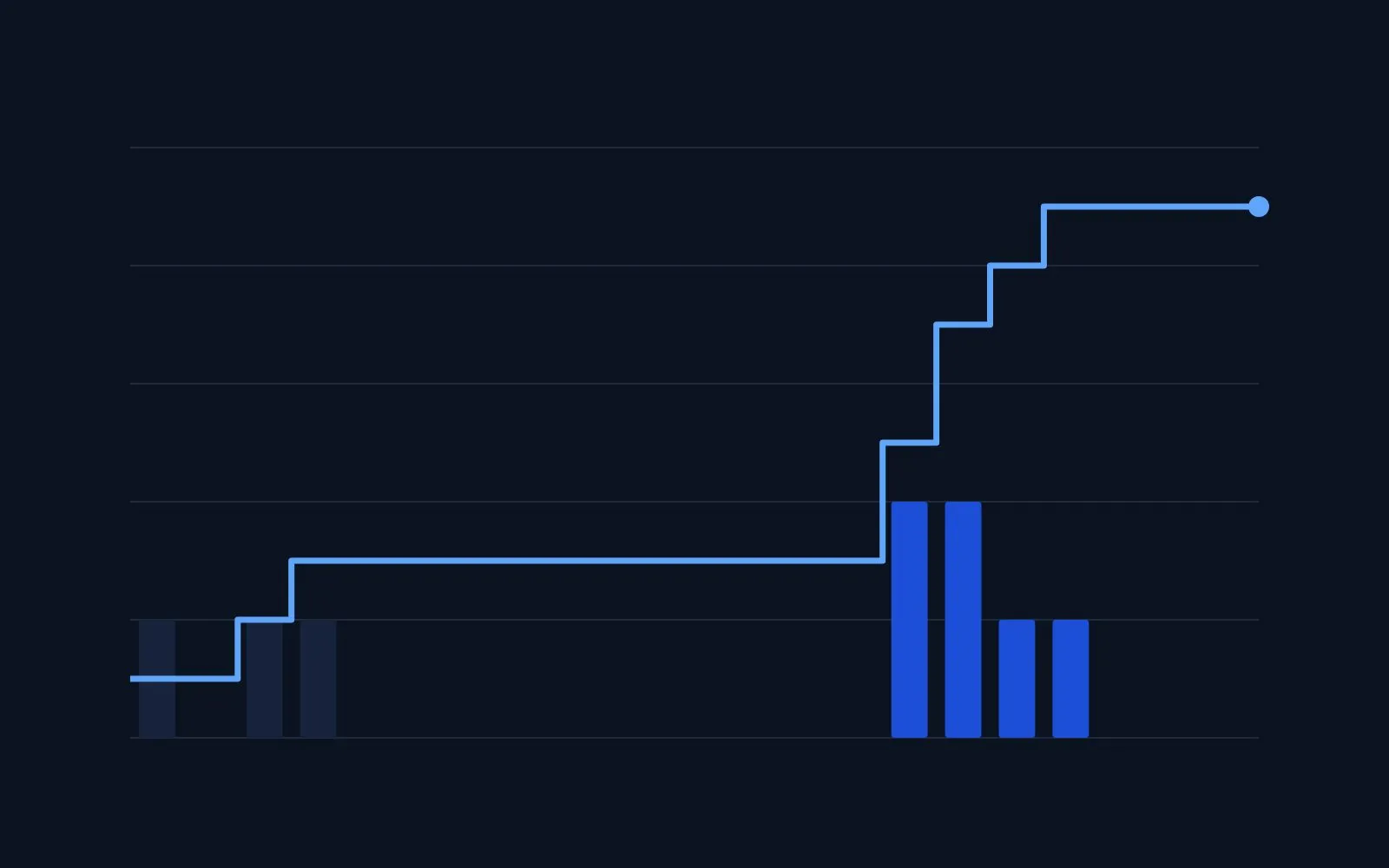
CVM sanctions cases opened against foreign online trading platforms, by year
Item
Value
2021
1
2022
2
2023
0
2024
0
2025
5
2026 (to 20 October)
1
Source: CVM open data on sanctions cases, file dated 20 October 2026; TBR analysis
After three cases in 2021 and 2022, the CVM opened none against a foreign trading platform for almost three years. Then came five in 2025 and one so far in 2026.
AxiCorp Financial Services Pty Ltd and AxiTrader LLC
February 2026
Charge not yet published; defence stage closed, and on 15 October both companies said they intend to propose a settlement
In the open cases the charges are allegations, not findings. A settlement with the CVM, called a termo de compromisso, ends a case without any admission of wrongdoing.
The penalties so far
Penalties in closed and decided cases (R$ million)
Item
Value
Pocket Option operator, fine, August 2026
R$3.90m
Binomo operator, settlement, February 2024
R$2.40m
Olymp Trade operator, fine, July 2024
R$0.68m
Source: CVM judgments and settlement decisions
The Pocket Option ruling shows how the number was built. The board set a base fine of R$3 million, then added 15% for each of two aggravating factors: relevant damage to the image of Brazil’s securities market, and the “systematic and repeated” nature of the conduct. Olymp Trade’s operator was fined R$255,000 for the unregistered public offer and R$425,000 for distributing and intermediating securities outside Brazil’s distribution system. Binomo’s operator agreed to pay R$2.4 million in four equal instalments.
The CVM does not take every offer. IQ Option first offered R$30,000, plus compensation for clients who had complained to the CVM after its 2020 stop order, capped at what each had first deposited. The CVM rejected it in November 2022, after its staff said the company was still repeatedly carrying on the conduct. A second offer, of R$200,000, was rejected unanimously on 24 March 2026: the CVM’s settlement committee found nothing that answered the reasons for the first rejection, and the board decided the case was best decided at judgment.
How the CVM decides a platform is targeting Brazil
Every one of these firms is based outside Brazil, so the first question in the offer cases is whether the offer counts as public in Brazil. The CVM applies its Guidance Opinion 33 of 2005: a foreign firm’s offer is public in Brazil if it means to reach Brazilian residents, or if it uses channels that can reach them without taking precautions to stop that happening.
The Pocket Option ruling lists what the CVM looked at:
a website in Portuguese, and social media profiles and a YouTube channel aimed at Brazilian investors;
paid posts on Brazilian news sites;
client testimonials on the homepage, under “What people say about us”, each shown with a Brazilian flag;
deposits through local payment methods, including Pix, until Brazilian payment firms stopped providing the service;
no blocking of visitors from Brazil, for example by the location of their internet address.
In a preliminary filing, the firm argued that Brazilians reached the platform entirely on their own initiative, with no marketing effort in Brazil. The CVM rejected that, and gave no weight to a footer disclaimer, added after the investigation began, saying the platform offered no CVM-regulated services. The firm filed no defence.
IQ Option’s first settlement offer is a useful list of what the CVM sees as aiming at Brazil. It offered to stop marketing campaigns directed at the Brazilian market, including on television, billboards and in magazines, to stop saying its services were meant for Brazilian residents, and to remove any flag that referred to Brazil from its website.
The stop order usually comes first
A stop order, published as an ato declaratório, is the CVM’s precautionary step: it warns the public and orders the firm to stop. It is not a penalty. At least six of the nine platforms had a CVM stop order or public alert against them before their sanctions case was opened:
Platform
Earlier CVM warning
Sanctions case opened
IQ Option
Stop order, April 2020
December 2021
Olymp Trade
Stop order, February 2019
June 2022
Binomo
Stop order, June 2020
July 2022
Hantec Markets
Stop order, February 2022, against a company the CVM found presented itself as responsible for the Hantec Markets website
July 2025
FBS
Public alert, February 2025
September 2025
Pocket Option
Stop orders, 2021 and July 2025
October 2025
The files show what happens when a warning is ignored. The CVM recorded that IQ Option carried on even after its April 2020 stop order, that Binomo’s Brazilian page was still offering its services when the charges were drawn up in July 2022, that complaints about Olymp Trade kept arriving after its 2019 order, and that Pocket Option’s Portuguese site and Brazil-facing channels were still live after two.
What it means for traders
A CVM case does not protect your money. The fines and settlements are payable to the CVM. None of them compensates clients.
The brand is not the company. A well-known broker can serve different countries through different companies. Axi holds licences from ASIC, the FCA, CySEC and the DFSA, but its international website opens accounts with AxiTrader LLC, a St Vincent and the Grenadines company that Axi itself describes as unregulated. XTB’s Brazilian case concerns its Belize company. Our audits name the company behind each platform and say which regulator, if any, supervises it.
Check the CVM’s warnings before you deposit. Stop orders and alerts are public on the CVM’s website, and most of the platforms here had one more than a year before they were charged.
Read the complaints. In the IQ Option file, the CVM’s staff cited many complaints about clients losing all or part of the money they had paid in. In the Pocket Option case, the CVM recorded reports from investors of trouble withdrawing money, prices that did not match and problems contacting the platform. These are complaints the CVM recorded, not findings.
What it means for firms
A licence elsewhere does not cover Brazil. The XTB, Axi and Hantec groups all hold licences from major regulators. The Axi case names AxiCorp Financial Services Pty Ltd, which holds Axi’s Australian licence, as well as its St Vincent company, although the CVM has not yet published the charge.
Brazilian partners and people can be named too. The XTB case names a Brazilian securities distributor and an individual alongside the broker, and the Hantec and Zero Markets cases each name an individual.
Settlement is possible, but not guaranteed. The CVM accepted R$2.4 million from Binomo’s operator and rejected IQ Option’s offers twice, the first time after its staff said the conduct was continuing. Four more are waiting: settlement proposals from Zero Markets, XTB and Hantec, and Axi’s stated intention to make one.
The test is about behaviour, not disclaimers. The Pocket Option ruling turns on Portuguese marketing, local payment methods and the absence of any block on Brazilian visitors. A disclaimer added once the CVM was looking counted for nothing.
How we checked
We downloaded the CVM’s open data on its sanctions cases (processo administrativo sancionador), in the file dated 20 October 2026, and selected every case against a foreign company behind an online trading platform. That data describes eight of them as unauthorised offers of securities or intermediation services. The Axi case was opened by the CVM’s intermediaries supervision unit after a complaint, and the data does not state its charge. We left out cases about investment funds, listed companies and a crypto investment scheme. The stage of each case and the dates of each accused party’s steps, such as settlement proposals and defences, are as recorded in that data.
We read the CVM’s decisions in the three closed or decided cases and in the IQ Option settlement decision, and took the penalty amounts from them. The platform behind each company, and the dates of the earlier stop orders and alerts, come from the CVM’s decisions, stop orders and alerts and from our own audits of each platform. The individuals named in some cases are not named here.
Every UK and EU CFD provider must publish the share of its retail accounts that lose money. We collected nine firms' current figures and read the rules that produce them.
A February 2026 statement tells firms that the commercial name of a leveraged derivative is irrelevant. What matters is whether it meets the definition of a CFD, and most perpetuals likely do.